Openfire5.0.5
Openfire is a real time collaboration (RTC) server licensed under the Open Source Apache License. It uses the only widely adopted open protocol for instant messaging, XMPP Openfire is incredibly easy to setup and administer, but offers rock-solid security and performance.


As we’re preparing the upcoming Openfire 5.1.0 release, I’ve been spending a lot of time looking at parts of the codebase that have been around for a long time.
Some of them date back to assumptions that were perfectly reasonable when Java 5 was current, IPv6 was still considered “future tech”, Docker didn’t exist yet, and “cloud-native” wasn’t a phrase anyone but meteorologists used.
Yet somehow, Openfire deployments that started in those days are still running today.
That got me wondering:
What’s the oldest Openfire deployment that you still run?
Not necessarily the oldest version (although I’d love to hear that too), but the oldest continuously running installation, the oldest surviving user database, or perhaps the weirdest setup that somehow still works despite years of upgrades, migrations and changing infrastructure.
I suspect there are Openfire instances out there that have survived datacenter migrations, moved from physical hardware to virtual machines to containers, switched databases more than once, and outlived several generations of administrators. Some probably still contain configuration decisions that nobody fully understands anymore. Is anyone still running Wildfire? Jive Messenger?
Honestly, I love those stories from the trenches. The odd workarounds, the “temporary” fixes that became permanent infrastructure, the upgrade that everyone expected to fail but somehow didn’t, or the deployment that quietly kept running for a decade without anyone thinking much about it.
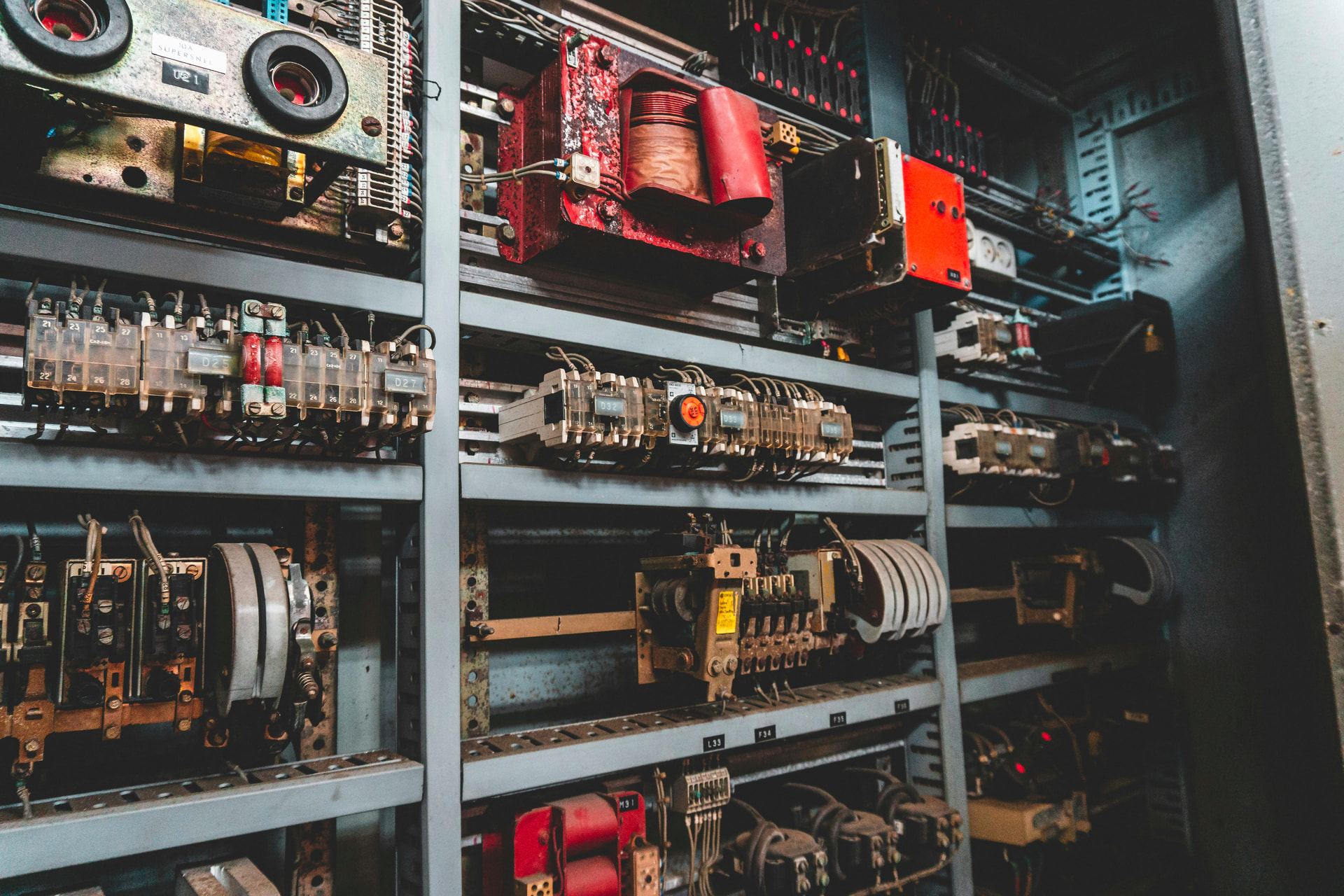
One of the things I appreciate most about infrastructure software is that success often becomes invisible. If a messaging server quietly keeps working for ten years, nobody talks about it. But that kind of stability is actually a huge achievement (both for the software and for the people operating it). I think that’s something we, as a community, can be genuinely proud of.
For Openfire 5.1.0, we’ve been modernizing quite a few internals:
- support for Java 25
- upgrades to Netty 4.2 and various database drivers
- improvements around reverse proxies and DNS handling
- clustering improvements
- security hardening
- performance fixes for larger deployments.
While doing that work, we constantly try to balance modernization with compatibility for long-running installations. That balancing act becomes much easier when we understand how people actually deploy and operate Openfire in the real world, which, apart from simply wanting to hear your stories, is another reason for me to ask this question.
So: I’d love to hear your stories! How old is your deployment? What version did you start with? What infrastructure changes has it survived over the years? Are there plugins or integrations you absolutely depend on? What operational lessons have you learned?
And perhaps most importantly: what surprised you most about running Openfire long-term?
I’m hoping this thread becomes a collection of deployment stories, operational lessons, and perhaps a bit of Openfire history.
Looking forward to hearing your stories!
We’d love to hear from you! Please join our community forum or group chat and let us know what you think!
For other release announcements and news follow us on Mastodon or X

The Ignite Realtime community is pleased to announce a new release of Openfire, version 5.0.5. The full changelog has more details with the highlights being bug fixes and bundled library updates whilst we continue to work on an upcoming 5.1.0 feature release.
You can obtain the new version of Openfire for your platform from its download page. The sha256sum values for the release artifacts are:
4ba9b6476efefc54378c0fd4a2a402177fd94bc11512354db887eb446f37f211  openfire-5.0.5-1.noarch.rpm
3a870ef09415f3bf2eac315ac826b59997eba6bcc38a1eb3740856ff16ffc11c  openfire_5.0.5_all.deb
94d3a8a159a68fdff17394c415d3ce1feb557fb8ef0618a883180f668a359cc2  openfire_5_0_5.dmg
bbc4c1147ff1a4d8740a5e12929e650dc04e3c7a6c765ff13855da48c16f980a  openfire_5_0_5.exe
50028a20587ea9d6b5bcc8260ca626e022d223b39748ffe7b9851d9b344dba6b  openfire_5_0_5.tar.gz
649f3b14a5403275780a2344b2d575f163a2e182eefa9c4978bd325cbf7486d5  openfire_5_0_5_x64.exe
49edd9873a84d2f6b19c24d360ac964ea9180753f6dff4355d75be3943e20817  openfire_5_0_5.zip
For those of you that enjoy metrics, here’s an accounting of 5.0.4 release artifact downloads.
| Name | OS | Downloads |
|---|---|---|
| openfire_5_0_4_x64.exe | Windows 64bit Launcher | 7,156 |
| openfire_5_0_4.exe | Windows 32bit Launcher | 4,963 |
| openfire_5.0.4_all.deb | Linux Deb | 4,455 |
| openfire_5_0_4.zip | Zip binary | 4,013 |
| openfire_5_0_4.tar.gz | Tar.gz binary | 3,526 |
| openfire-5.0.4-1.noarch.rpm | Linux RPM | 3,232 |
| openfire_5_0_4.dmg | Mac | 2,768 |
| Total | – | 30,113 |
We’d love to hear from you! Please join our community forum or group chat and let us know what you think!
For other release announcements and news follow us on Mastodon or X
I have recently started experimenting with adding support for three additional databases in Openfire: MariaDB, Firebird and CockroachDB.
This work is still exploratory. Before committing to this direction, I would like to get a better understanding of whether this is actually valuable to the Openfire community.
I have prepared initial pull requests for each database:
- MariaDB: https://github.com/igniterealtime/Openfire/pull/3240 (OF-3239 in our issue tracker)
- Firebird: https://github.com/igniterealtime/Openfire/pull/3241 (OF-3237 in our issue tracker)
- CockroachDB: https://github.com/igniterealtime/Openfire/pull/3243 (OF-3238 in our issue tracker)
These are not production-ready, but intended to validate feasibility and surface any obvious issues.
Why these databases?
MariaDB is widely used as a drop-in replacement for MySQL. Although Openfire supports MySQL, MariaDB is not explicitly treated as a first-class option. Given how often it is used in practice, formal support could provide more confidence for administrators.
Firebird represents a more niche but still relevant ecosystem. It is commonly found in long-lived, on-premise systems where changing the database is not realistic. Supporting it could make Openfire easier to adopt in those environments.
CockroachDB targets modern, distributed deployments. With its PostgreSQL compatibility and focus on resilience and scalability, it could make Openfire more attractive for cloud-native and multi-region setups.
Trade-offs
Supporting additional databases comes with a cost: more code paths, more testing, and more long-term maintenance. The key question is whether the added flexibility justifies that complexity.
Feedback wanted
Before taking this further, I would really appreciate feedback from the community:
Are you using (or considering) MariaDB, Firebird or CockroachDB with Openfire? Would official support influence your deployment decisions? Do you see this as valuable, or as unnecessary complexity?
Please share your thoughts on the pull requests or through the usual community channels!
For other release announcements and news follow us on Mastodon or X
The Ignite Realtime community is happy to announce a new release of its open source, real-time communications server server Openfire! Version 5.0.4 continues our effort to provide stable 5.0.x series releases whilst we finalize work on an upcoming 5.1.0 release. Please refer to the full changelog for more details.
You can obtain the new version of Openfire for your platform from its download page. The sha256sum values for the release artifacts are:
c49add8f50999b2d7fcdd8960bc7d70bf59eb95d12daedf92902e4b034c1c737  openfire-5.0.4-1.noarch.rpm
14d22bef24fb01770f51c655c8b3b54207125b1b70641175d8ad25b585e6332a  openfire_5.0.4_all.deb
ddd40e0bac4c4fae0678b6df4fd5ad28f77af50fd530e3327326f3b488f16ae4  openfire_5_0_4.dmg
8c2fcb27f9afe01b79d59f7bf0736b21cdb72b5464de25a183b596329e351099  openfire_5_0_4.exe
01c7314268d87b1f8eee0677bb89656f12a082e6461b207d3955f5d9632e2f78  openfire_5_0_4.tar.gz
13b579672b2ce238934aa919cd968636c0f5c8afda5aeb3aec08d60feca35df4  openfire_5_0_4_x64.exe
05b9e5fa976202ef97d183177f6de699cf68bf0cfd422f721a4c8dc5676c1612  openfire_5_0_4.zip
For those of you that enjoy metrics, here’s an accounting of 5.0.3 release artifact downloads.
| Name | OS | Downloads |
|---|---|---|
| openfire_5_0_3_x64.exe | Windows 64bit Launcher | 12,407 |
| openfire_5_0_3.exe | Windows 32bit Launcher | 8,269 |
| openfire_5.0.3_all.deb | Linux Deb | 8,113 |
| openfire_5_0_3.zip | Zip binary | 6,747 |
| openfire-5.0.3-1.noarch.rpm | Linux RPM | 5,811 |
| openfire_5_0_3.tar.gz | Tar.gz binary | 5,773 |
| openfire_5_0_3.dmg | Mac | 4,646 |
| Total | – | 51,766 |
We’d love to hear from you! Please join our community forum or group chat and let us know what you think!
For other release announcements and news follow us on Mastodon or X
I am excited to share that members of the IgniteRealtime community will be heading to Brussels, Belgium, from January 29th to February 1st to take part in two important events for the open-source and real-time communications ecosystem: the annual XSF Summit and FOSDEM.
XSF Summit: Connecting the XMPP community
The XSF Summit, organized by the XMPP Standards Foundation, brings together developers, maintainers, and contributors from across the XMPP ecosystem. IgniteRealtime community members will be there to collaborate with peers, discuss the current state and future direction of XMPP, and share insights from ongoing IgniteRealtime projects.
These face-to-face discussions are invaluable for aligning on standards, exchanging implementation experience, and strengthening the relationships that keep open, decentralized communication thriving.
FOSDEM: Celebrating open source at scale
Following the XSF Summit, our community members will also attend FOSDEM (Free and Open source Software Developers’ European Meeting), one of the largest and most influential open-source conferences in the world.
FOSDEM is a unique opportunity to:
- Learn about the latest developments across a wide range of open-source technologies
- Meet contributors and users from diverse projects and communities
- Represent IgniteRealtime and real-time communication technologies within the broader open-source ecosystem
You’ll likely find us at the XMPP & Realtime Lounge (building AW, level 1).
Meet us in Brussels
If you’re attending the XSF Summit, FOSDEM, or will be in Brussels during this time, we’d love to connect. These events are a great chance to meet fellow IgniteRealtime users and contributors, exchange ideas, and talk about where we’re headed next.
We look forward to productive discussions, new connections, and bringing fresh energy and ideas back to the IgniteRealtime community. See you in Brussels! 
For other release announcements and news follow us on Mastodon or X

 Nomak in "
 Tony Burtovoy in "
 rfc in "
 Teo Berdejoglou in "
 VMC in "